artikel
Writing an introduction to photography is like writing an introduction to words. Photography is complex, full of variety, and capable of limitless storytelling and emotion.
What separates inspiring photographs from ordinary ones, and how can you improve the quality of your own photos? This article lays a foundation to answer to those questions and introduce you to the concept of photography from the ground up.
What Is Photography?
Photography is the art of capturing light with a camera, usually via a digital sensor or film, to create an image. With the right camera equipment, you can even photograph wavelengths of light invisible to the human eye, including UV, infrared, and radio waves.
The first permanent photograph was captured in 1826 (some sources say 1827) by Joseph Nicéphore Niépce in France. It shows the roof of a building lit by the sun. You can see it reproduced below:
We’ve come a long way since then.
This article is the second chapter of my detailed “Photography Basics” guide. My goal in this chapter is twofold: to introduce you to the past and present worlds of photography, and to give you a general idea of the principles that you’ll need to learn as a beginning photographer. Let’s start with a brief history lesson.
A Short History of Photography and the People Who Made It Succeed
Photography is everywhere today, and it can be hard to remember that it wasn’t always that way. Color photography only started to become popular and accessible with the release of Eastman Kodak’s “Kodachrome” film in the 1930s. Before that, almost all photos were monochromatic – although a handful of photographers, toeing the line between chemists and alchemists, had been using specialized techniques to capture color images for decades before. (You’ll find some fascinating galleries of photos from the 1800s or early 1900s captured in full color, worth exploring if you have not seen them already.)
These scientist-magicians, the first color photographers, are hardly alone in pushing the boundaries of one of the world’s newest art forms. The history of photography has always been a history of people – artists and inventors who steered the field into the modern era.
Below, I’ve compiled a brief introduction to some of photography’s most important names. Their discoveries, creations, ideas, and photographs shape our own pictures to this day, subtly or not. Although this is just a brief bird’s-eye view, these are all people you should know before you step into the technical side of photography:
1. Joseph Nicéphore Niépce
- Invention: The first permanent photograph (“View from the Window at Le Gras,” shown earlier)
- Where: France, 1826
- Impact: Cameras had already existed for centuries before this, but they had one major flaw: You couldn’t record a photo with them! They simply projected light onto a flat surface – one which artists used to create realistic paintings, but not strictly photographs. Niépce solved this problem by coating a pewter plate with, essentially, asphalt, which grew harder when exposed to light. By washing the plate with lavender oil, he was able to fix the hardened substance permanently to the plate.
- Quote: “The discovery I have made, and which I call Heliography, consists in reproducing spontaneously, by the action of light, with gradations of tints from black to white, the images received in the camera obscura.” Mic drop.
2. Louis Daguerre
- Invention: The Daguerreotype (first commercial photographic material)
- Where: France, 1839
- Impact: Daguerreotypes are images fixed directly to a heavily polished sheet of silver-plated copper. This invention is what really made photography a practical reality – although it was still just an expensive curiosity to many people at this point. The first time you see a daguerreotype in person, you may be surprised just how sharp it is.
- Quote: “I have seized the light. I have arrested its flight.”
3. Alfred Stieglitz
- Genre: Portraiture and documentary
- Where: United States, late 1800s through mid 1900s
- Impact: Alfred Stieglitz was a photographer, but, more importantly, he was one of the first influential members of the art community to take photography seriously as a creative medium. He believed that photographs could express the artist’s vision just as well as paintings or music – in other words, that photographers could be artists. Today’s perception of photography as an art form owes a lot to Stieglitz.
- Quote: “In photography, there is a reality so subtle that it becomes more real than reality.”
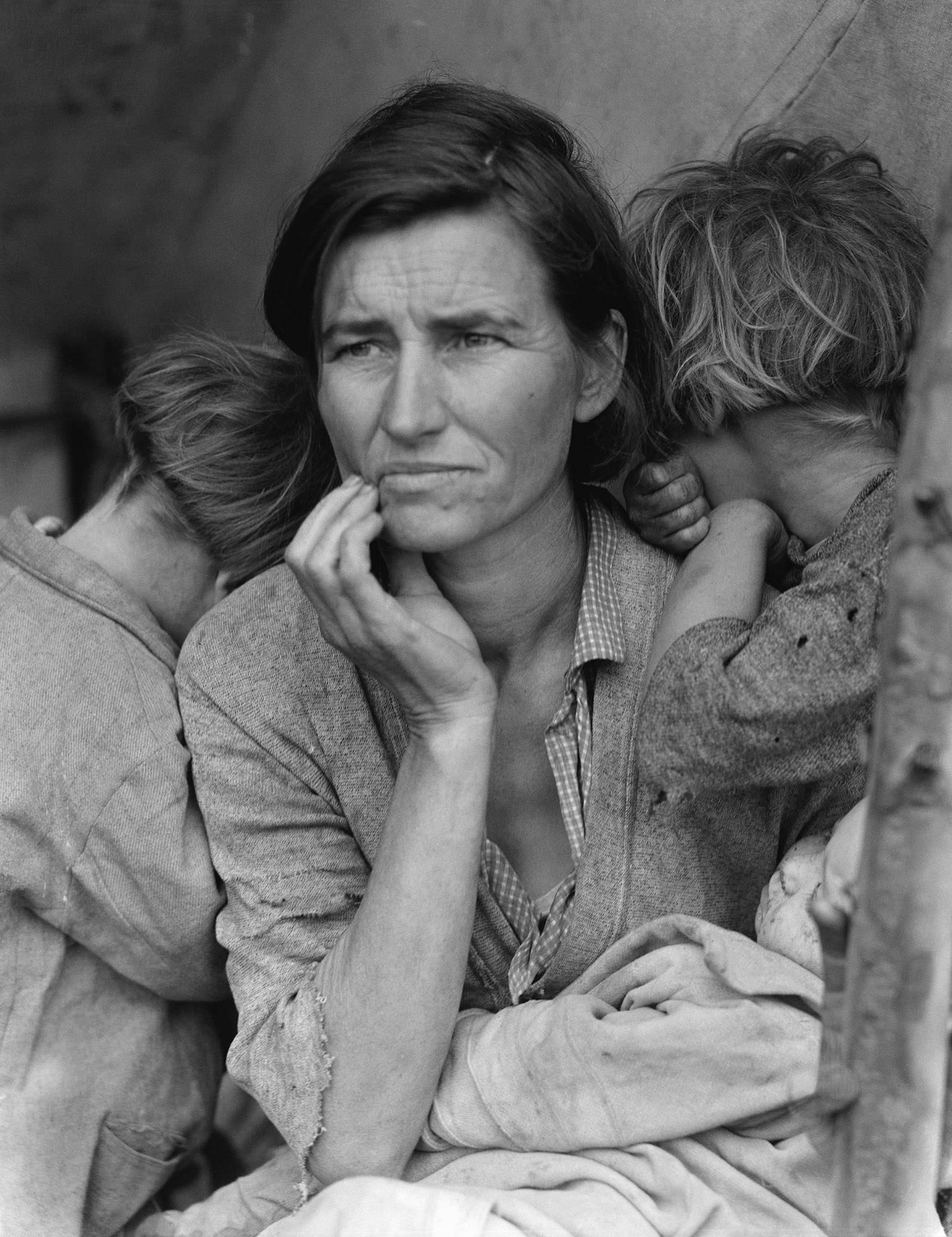
4. Dorothea Lange
- Genre: Portrait photography
- Where: United States, 1930s
- Impact: One of the most prominent documentary photographers of all time, and the photographer behind one of the most influential images ever (shown below), is Dorothea Lange. If you’ve ever seen photos from the Great Depression, you’ve seen some of her work. Her photos shaped the field of documentary photography and showed the camera’s potential as a storytelling and reportage tool.
- Quote: “The camera is an instrument that teaches people how to see without a camera.”
5. Ansel Adams
- Genre: Landscape photography
- Where: United States
- When: 1920s to 1960s (for most of his work)
- Impact: Ansel Adams is perhaps the most famous photographer of all time, which is remarkable because he mainly took pictures of landscapes and natural scenes. (Most famous photographers have tended to photograph people instead.) Ansel Adams helped usher in an era of realism in landscape photography, and he was an early champion of the environmentalism and preservation movements in the United States.
- Quote: “There is nothing worse than a sharp image of a fuzzy concept.”
5. Ansel Adams
- Genre: Landscape photography
- Where: United States
- When: 1920s to 1960s (for most of his work)
- Impact: Ansel Adams is perhaps the most famous photographer of all time, which is remarkable because he mainly took pictures of landscapes and natural scenes. (Most famous photographers have tended to photograph people instead.) Ansel Adams helped usher in an era of realism in landscape photography, and he was an early champion of the environmentalism and preservation movements in the United States.
- Quote: “There is nothing worse than a sharp image of a fuzzy concept.”
5. Ansel Adams
- Genre: Landscape photography
- Where: United States
- When: 1920s to 1960s (for most of his work)
- Impact: Ansel Adams is perhaps the most famous photographer of all time, which is remarkable because he mainly took pictures of landscapes and natural scenes. (Most famous photographers have tended to photograph people instead.) Ansel Adams helped usher in an era of realism in landscape photography, and he was an early champion of the environmentalism and preservation movements in the United States.
- Quote: “There is nothing worse than a sharp image of a fuzzy concept.”

Komentar
Posting Komentar